

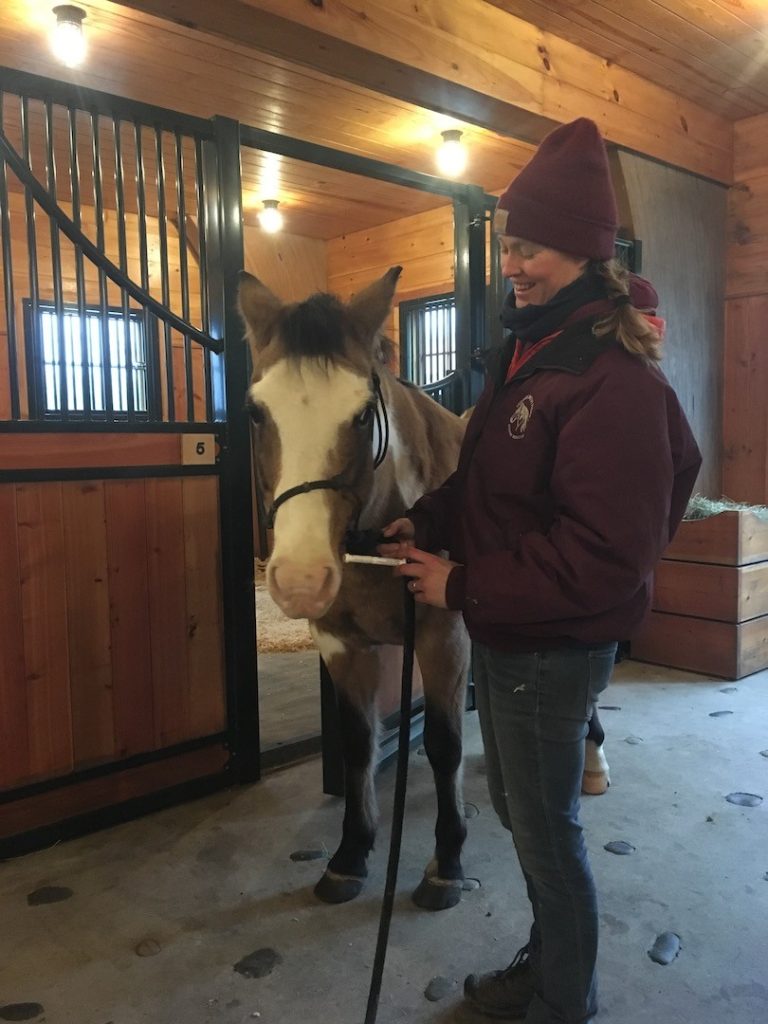
Horses are natural grazers and in the wild would spend the majority of their day eating. Since horses were meant to be nibbling almost constantly, their stomachs secrete acid 24 hours a day to help digest all that food.
Unfortunately, most farms do not have the option to let their horses graze or eat to that extent. Because of this, horses end up getting fed larger meals 2-3 times a day. When this happens, the risk for equine ulcers can occur as the horse may go hours without food in their stomach, yet the stomach continues to secrete acid. This can lead to ulcerations in the stomach lining, which can be very painful to the horse.
Gastric ulcers in horses are extremely common. In fact, over 90% of racehorses have ulcers, over 60% of performance horses, and 30-50% of foals.
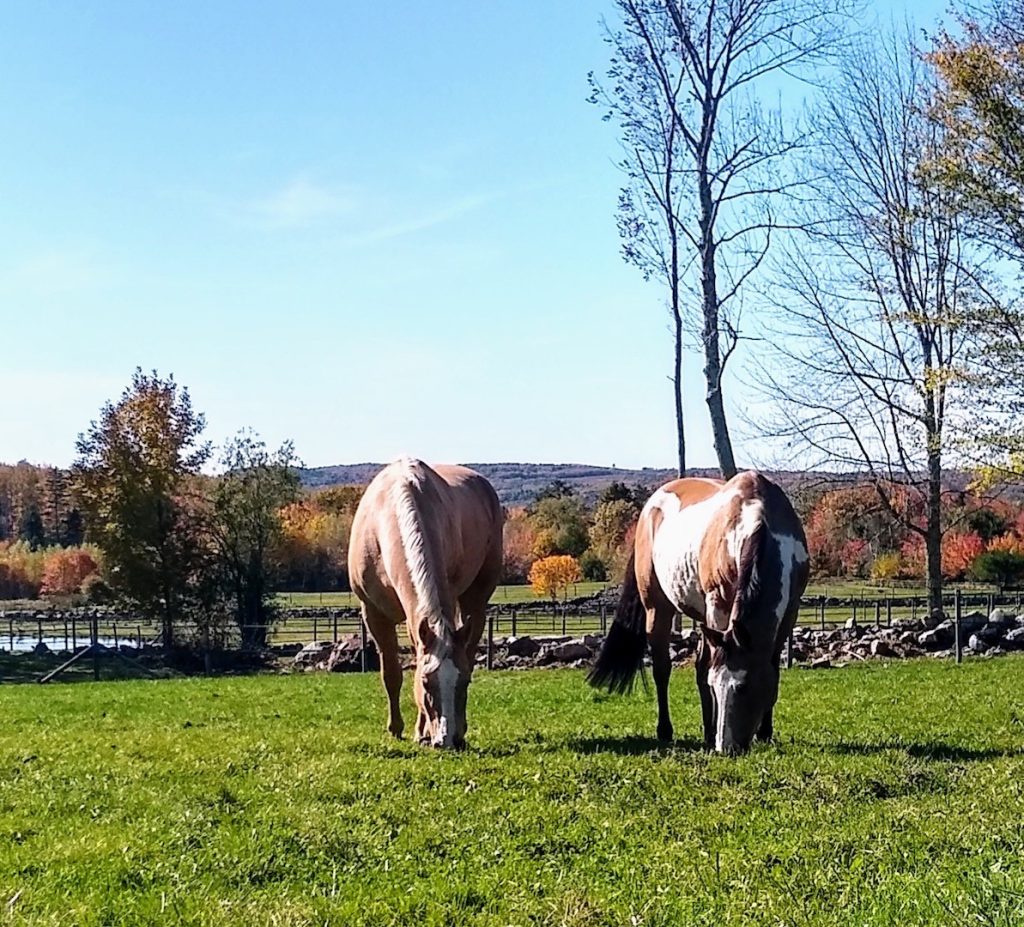
The two most common causes of ulcers are stress and stable management. Stress is a huge factor as it may be caused by almost anything: trailering, showing, a new environment, new pasture mates, training changes, neglectful situations…the list is long. In regards to barn management, situations such as limited turn out and feeding too much grain or too little hay can all lead to ulcers.
Symptoms may vary between horses, but some of the most common include: reduced or poor appetite, weight loss, poor performance, reoccurring colic, unusual spookiness, or a sour attitude. Thankfully, ulcers are a treatable condition. With proper management and medication prescribed by your vet, horses can get better.
Here at Horses With Hope, we work with many horses who come from neglectful situations. They’ve had a lot of physical and mental stress in their lives, so the likelihood of them having ulcers is very high. For this reason, we typically treat our rescue horses with ulcer medication as soon as they arrive, and before we begin any serious training.
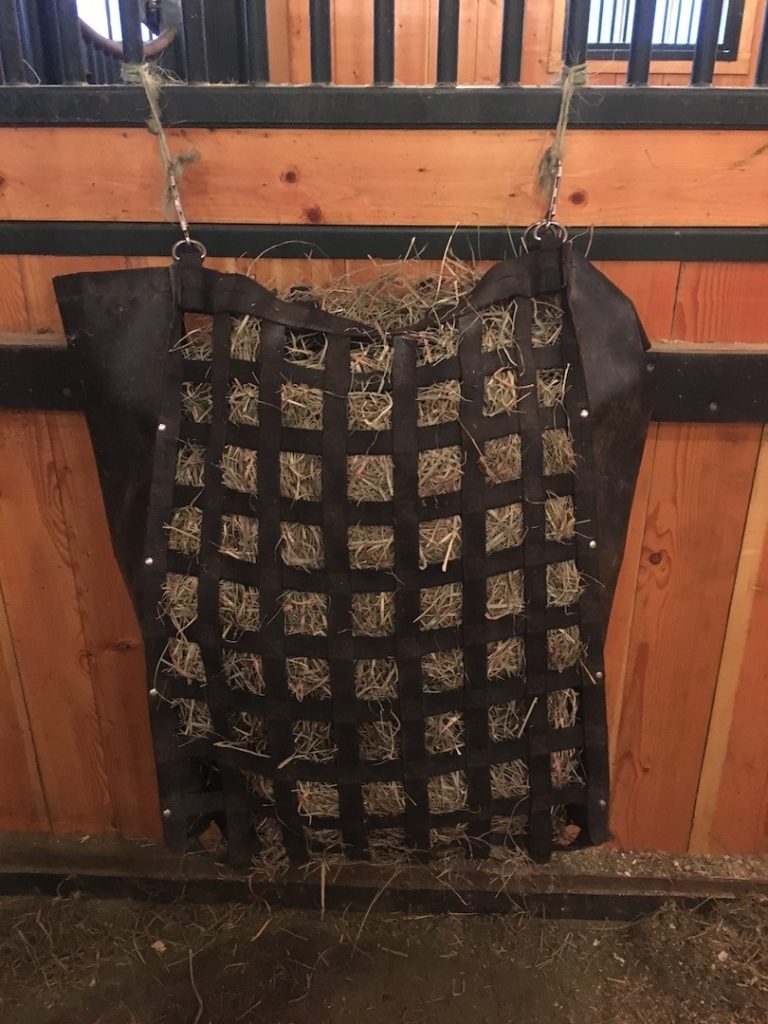
In addition to ulcer medication, we also use a variety of management techniques to help prevent an occurrence in future. A few of these include: using nibble nets to help the horses’ hay meals last longer, making sure that hay or forage is always available, feeding small amounts of grain, and 24/7 turn out when possible (or at least all day).
The only way to know for sure if a horse has gastric ulcers is to have a vet ‘scope’ them, and look inside their stomach. However, most vets can do a physical assessment and can decide that treatment is necessary based on symptoms shown. If you think your horse might have gastric ulcers we highly recommend contacting your vet. They can give you the best advice on how to proceed, and will help you and your horse get back on the right track.


