
Horse rescue is a multi-faceted endeavor. Sometimes the equines are in dire need of critical and supportive care just to get them out of physical crisis. The work and dedication doesn’t stop once they are healthy, however. We need to begin building up their strength and stamina before their bodies, minds and emotions can handle any focused training program. This is crucial preparation that enables them to be successful in their new homes once they are adopted.
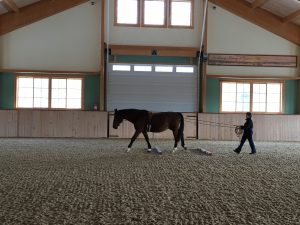
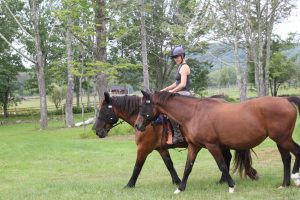
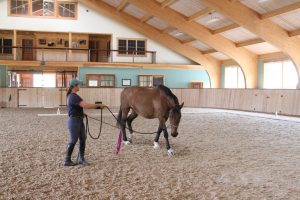
A prime example of this approach is what we did with our older mare Cassiopeia. Once we addressed her ailments, we began getting her back into condition by ground-driving, long-lining, and round pen work, which served the dual purpose of showing us how much she knew. We also ponied her off another horse on short trail rides. We did this for a few months before ever getting on her back.
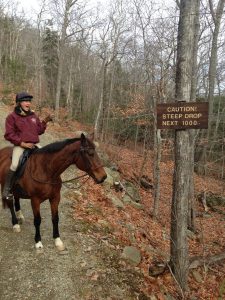
Once we had progressed to riding her in an arena, we began trail rides incorporating gentle hills. This hill work, which was all done at a walk, continued to build muscle along her back and in her hindquarters. It taught her to round up into her back and carry herself in a biomechanically sound way, which in turn helps support her joints.
But riding out (or hand walking your horse on the trail) has many other benefits as well—it enables the horse to move out and gives both horse and rider a nice change of scenery. It also builds mental and emotional fitness in the horse, creating a wonderful all-around partner.
Being out on the trail is a wonderful opportunity to be “in the moment” with your horse, and to connect with nature. Not too long ago one of our trainers was out with a horse on the blueberry barrens above the farm. That place, she said, was “magical,” and she recalled seeing a snowy owl up there.
But not everyone has access to trails or property to ride out on, and maybe not even anything resembling a hill. Not to worry. We like to use poles, barrels, or logs that are no higher than 18 inches. We ask the horse to go over them on circles and straight lines, usually starting out on a long line. Depending on the fitness and health of the horse, we may then progress to navigating the obstacles while riding. Walking through a cavaletti grid is better for older horses with swayed backs, as it encourages them to stretch their backs and use their toplines.
If riding out on hilly trails, zigzag instead of going straight up or straight down. And, when hand-walking, asking your horse to back up a slight incline really gets him to tuck his hindquarters underneath himself. Start out with just a few steps at first, gradually working up to longer stretches within reason.
Keep in mind, of course, that your horse needs to be sound to begin this. Check with your veterinarian if you are unsure or if your horse has any problems or discomfort. We incorporate bodywork whenever necessary and any supplements or treatment the vet may recommend, such as for joint problems or muscle stiffness. We try to resolve any physiological issues before beginning a conditioning program.
For more detailed examples of conditioning programs and correct spacing of cavaletti grids and trot/canter poles, search the Web or any online equine library.