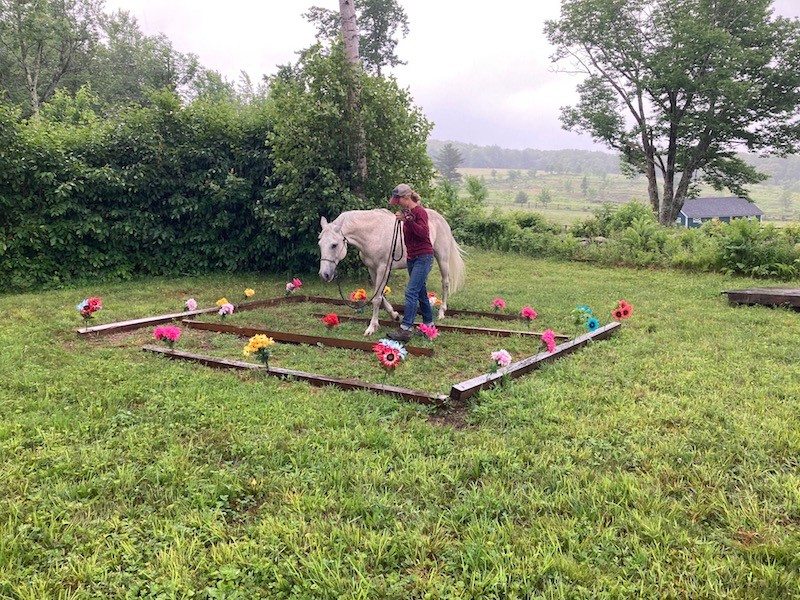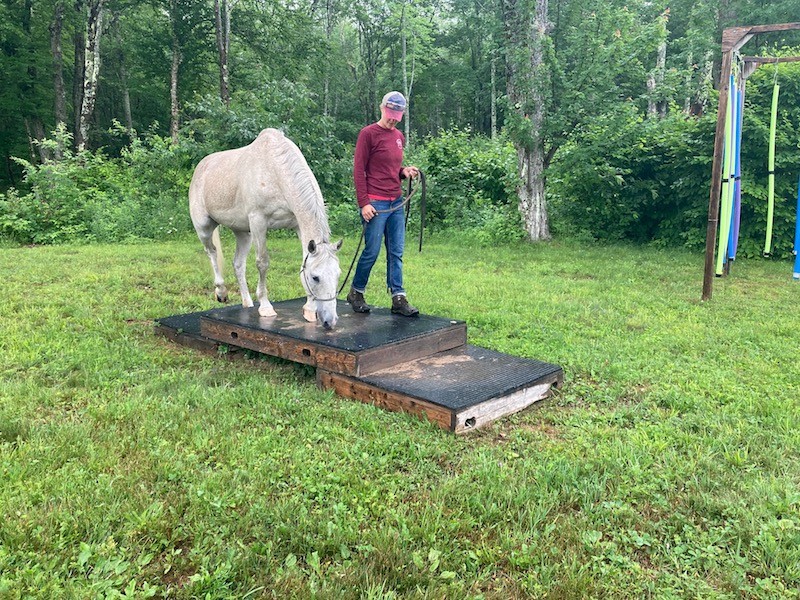

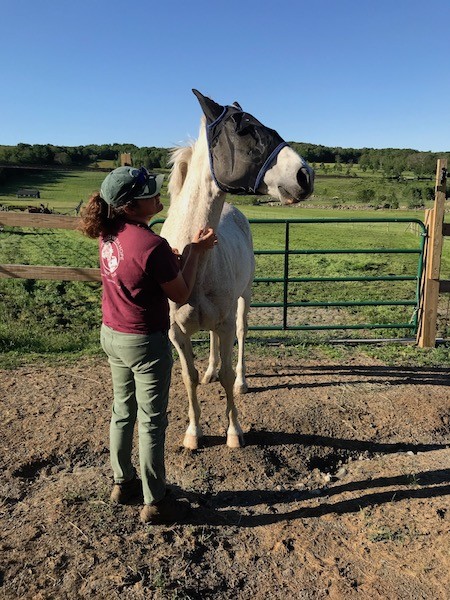
Just last week, we welcomed Clyde into our training program. This 16 yo, 15.3 hh gelding was part of a state seizure case and is now owned by the MSSPA. Little is known of his background, but he was ridden while at the MSSPA and is well behaved for vet and farrier work.
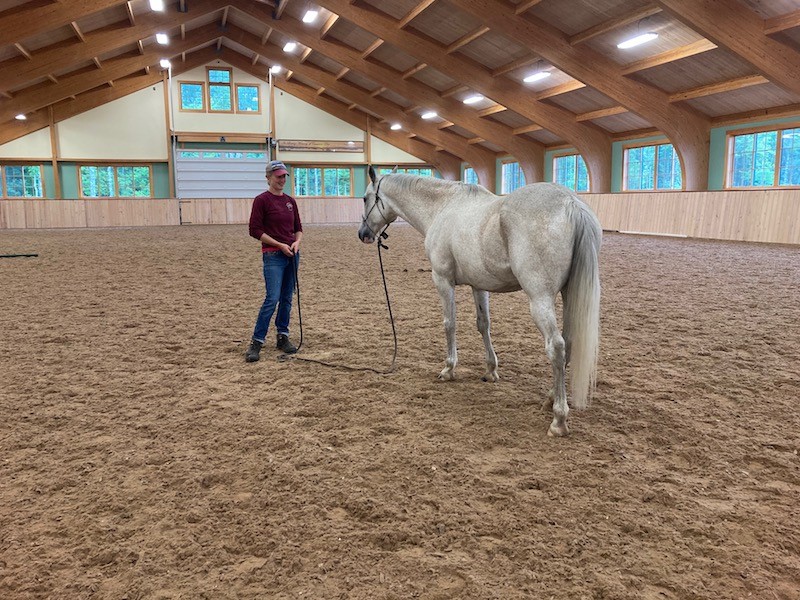
Our immediate focus with Clyde has been on groundwork. He has already proven to be a very sweet, friendly horse who understands the basics, and we know that he can be saddled and ridden successfully. What we see as being Clyde’s biggest challenge is his insecurity about the comings and goings of other horses. Clyde is highly alert to the horses around him, and really struggles if any change is made. With this type of horse who gets easily distracted and wants to leave the scene, our primary goal is to help them learn to ‘stay with us’ mentally. You can’t alleviate this type of nervous energy by working the horse harder or faster, that will only increase the horse’s anxiety. We need to be able to get and keep Clyde’s attention, but without making him more nervous in the process.
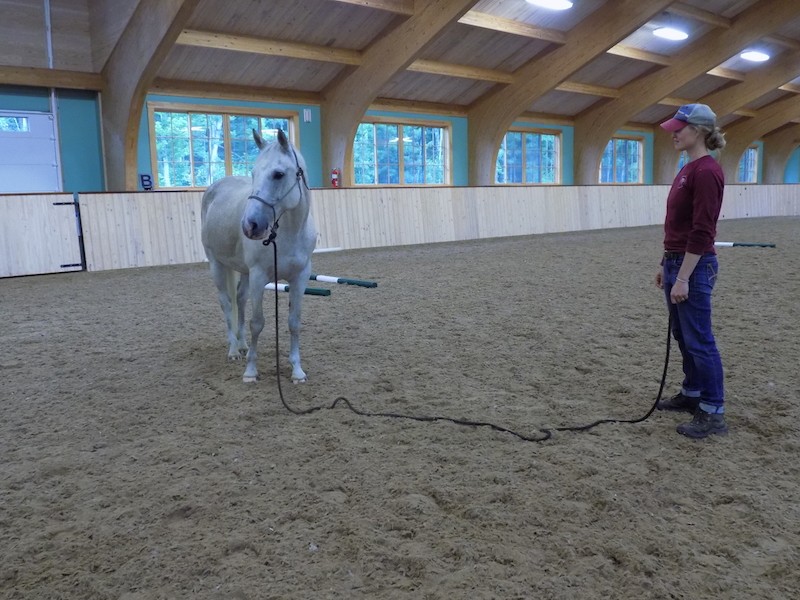
To help accomplish this goal, we keep a few key concepts in mind. We don’t want to focus on physically controlling Clyde’s every step; we want him to keep track of us so that he is responsible for moving his own feet in response to our cues. Clyde’s go-to is to crowd into a person’s space, and so instead of directing pressure at him in those moments, we’re going to make it inconvenient when he is too close. This can mean jumping around, moving our arms, anything that makes him notice us and think, ‘I’d better step back, this is weird with her moving around like that.’ As soon as he moves away, we stop. We’re encouraging Clyde to think through the problem, and then we highlight the answer when he gets it by immediately stopping all movement. Similarly, when Clyde sees another horse and wants to leave us to go socialize, we might let him go until he hits the end of the lead rope. No pressure when he stays with us, but it’ll be inconvenient with the pressure on the end of the rope. Again, a problem for him to think through without us immediately telling him the answer.
When walking around with Clyde, we’re working to be ‘unpredictable’ in our movements so that he needs to focus on keeping track of us. This might mean suddenly reversing direction, or weaving side to side. When he pays close attention and follows well, we can take a break and just walk off normally. Again, what we’re trying to keep in mind is that he needs to pay attention to us and is responsible for his own feet. We’re going to encourage this by: letting him search for the answer and think it through; making the wrong thing inconvenient (but not through pressure at him) and most importantly, by highlighting the right answer through immediate release of all pressure.