

 Most horses spend between six to 12 months in our program. Our first priority is to make sure they are physically comfortable, and then to establish which training questions are fair, reasonable, and possible. For example, between our hands-on assessment and the vet’s evaluation, it has been determined that three of our current horses should not be asked to carry a rider. Usually the equines in our care have experienced neglect, years with little to no training, or both. Although horses are always communicating, it can be hard to decipher exactly what they are saying! One of the challenges we often face is determining whether a behavior is caused by pain, or whether it’s an emotional or mental issue, or both.
Sometimes there is an obvious physical cause, with sore feet, ulcers, Lyme, low vitamin E, or other metabolic issues being some of the most common. Once we address these and include bodywork, proper farrier, dental, and veterinary support, a healthy diet and 24/7 turn out with buddies, this is often enough to set most horses on the right track physically.
 But for many, particularly those with prior riding and handling experience, the journey is only just beginning and it’s the mental and emotional side that needs further support. We firmly believe that ‘negative’ or unwanted behaviors are not disobedience, they are communication and information. Very often, these stem from confusion: the horse literally doesn’t understand the question. Often there is anxiety or tension present, so the horse is not relaxed enough to focus in the moment. Sometimes, they’re doing what has worked or been rewarded in the past: meaning there is a pattern in place which we need to interrupt and rewrite.
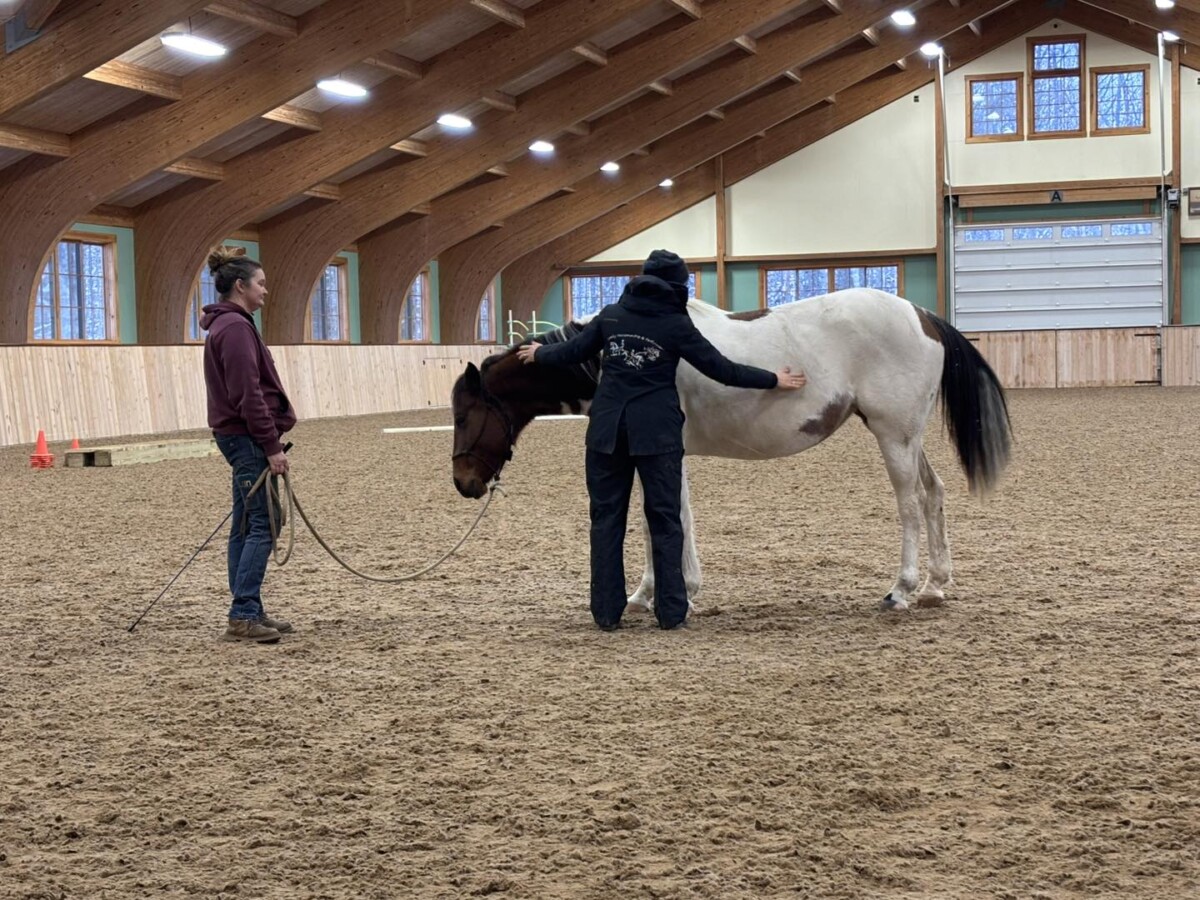
Understanding why a behavior might occur is so helpful when looking to create positive change, but in our experience this can be a tricky thing to pin down. For example, three of the mares currently in our program, Sunny, Galaxy and Cheyenne, all initially displayed reactivity to human touch. All three would pin their ears and threaten to bite at times if touched on the chest, withers, or belly and Sunny would pin her ears and kick out in response to a rope or girth tightening around her barrel. We addressed obvious physical issues first, in the form of front shoes where needed, Lyme and ulcer treatments, and Equioxx (a daily anti-inflammatory pain medication). While these steps took effect, we continued thoughtful handling so that we could gauge whether the behaviors were changing.
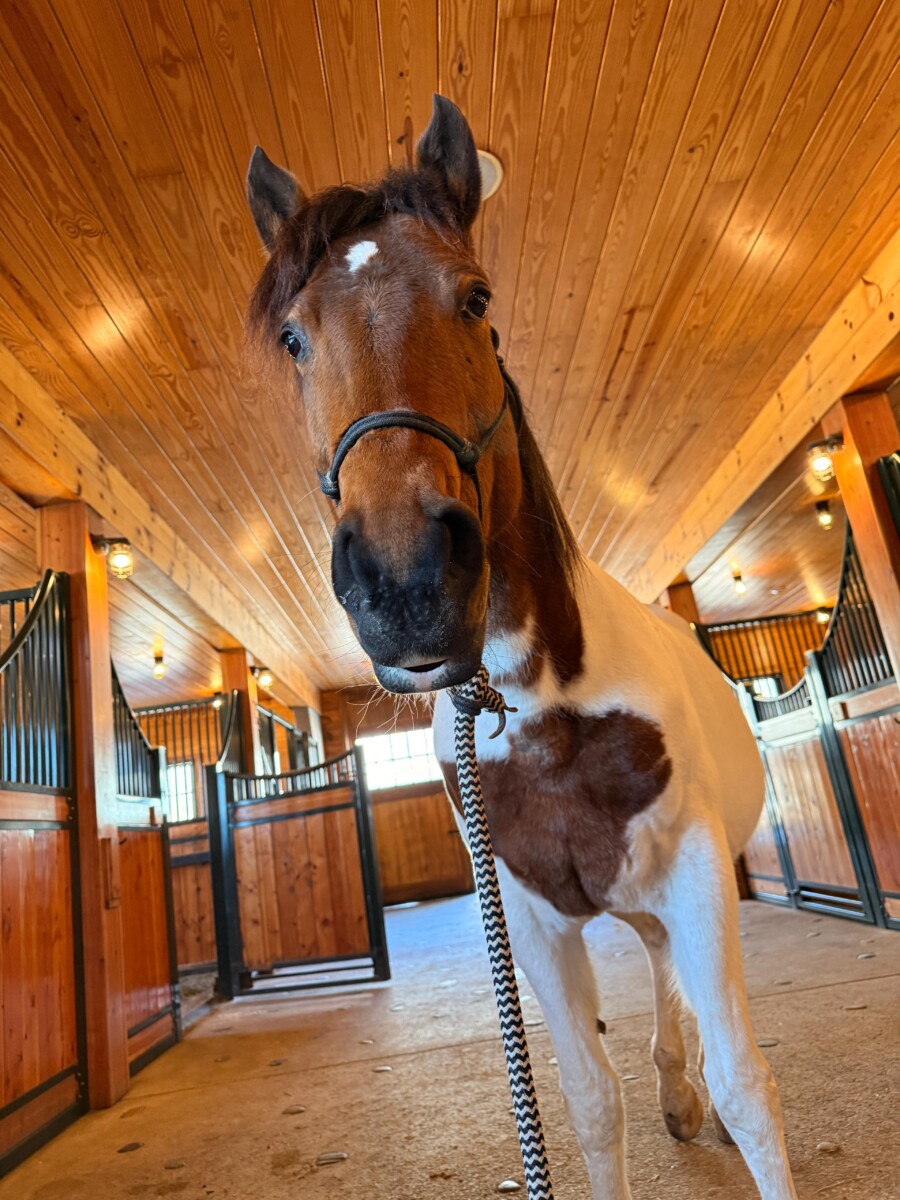 Sometimes, gentle repetition in the form of approach and retreat is enough to break a learned behavior. Cheyenne let go of much of her initial defensiveness to touch with this method. It took time, consistency, and a quick pattern-interrupt in the form of backing up or moving her feet if she offered to bite or kick. Cheyenne also had a firmly set idea about her feet: she did not want us to pick them up. She would kick out with her hinds when we tried to pick up the fronts, and getting a hand on the hind legs wasn’t even an option. We knew that physical discomfort could be a factor, but with the support of Equioxx we felt it was a fair ask. We also knew that if Cheyenne could not have her feet safely maintained, she wouldn’t have many future options so we needed to see what was possible. With a defensive type like this, using a leg rope didn’t feel right: we needed to build up her trust without demanding that she accept our idea. So, we turned to a combination of positive reinforcement with treats, and liberty work to show that she had freedom to choose. The liberty work began to open Cheyenne up to the idea that people were listening, and she then became more willing to try our idea of picking up her feet. It didn’t happen overnight, but with time, thoughtful repetition and positive reinforcement, Cheyenne now stands quietly for daily hoof care.
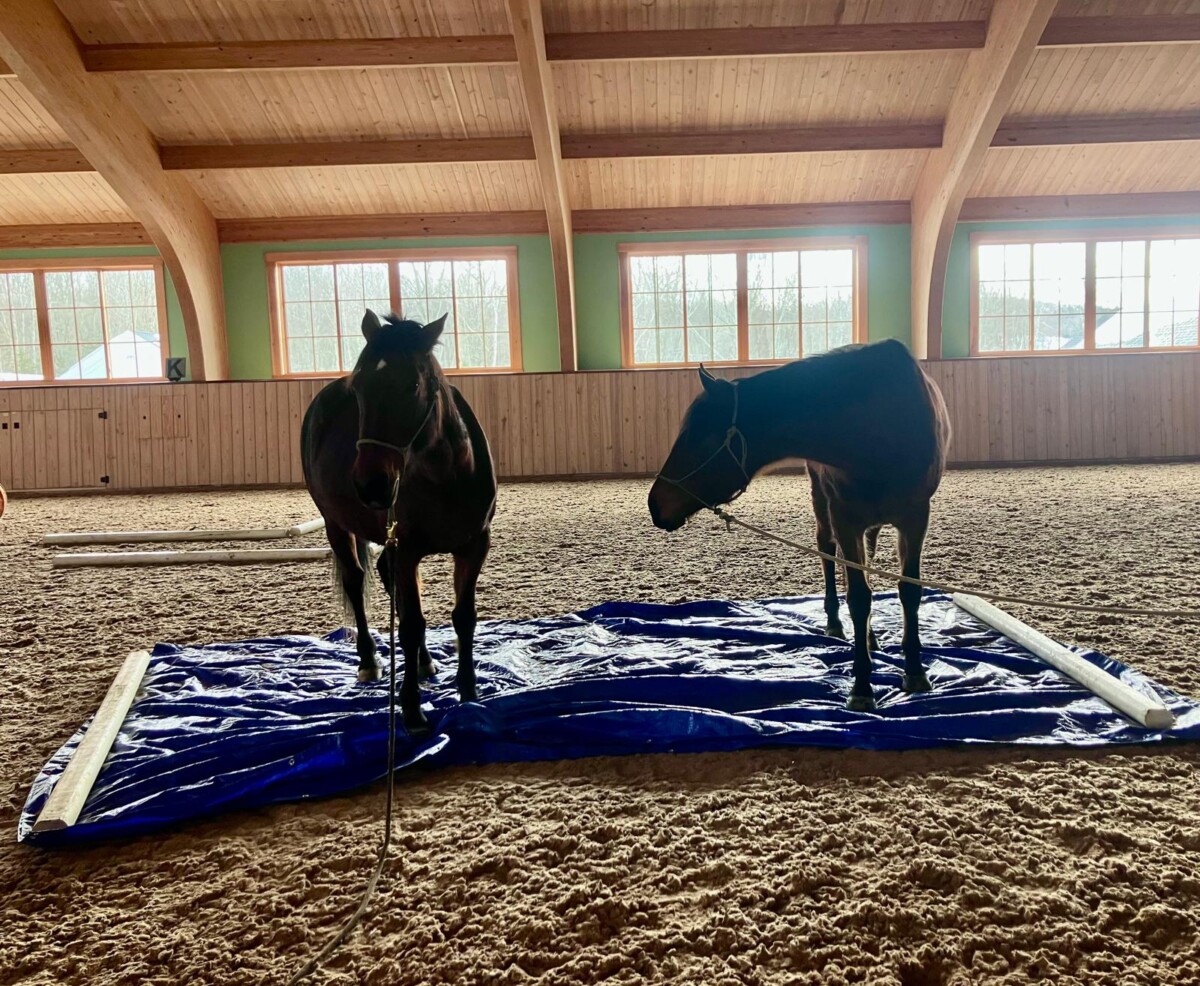 With Sunny and Galaxy, the defensive reactions to touch diminished greatly with physical support, but did not disappear altogether. For Sunny, the addition of positive reinforcement helped immensely in breaking several defensive patterns. For example, initially Sunny would clamp her tail and kick out if someone tried to take her temperature, so we introduced treats to see if we could reframe her idea around this task. We began by giving her a cookie for allowing her tail to be lifted, then for lifting it softly, then eventually for inserting the thermometer. This was a fairly easy pattern interrupt, but some are more complicated: for example both on line and under saddle Sunny still struggles with upward transitions. Once established in a gait she looks comfortable, but during upward transitions she will often pin her ears and appear frustrated. Is there pain, or the anticipation of discomfort, or is it pattern? Only time, and continued thoughtful care and training will tell.
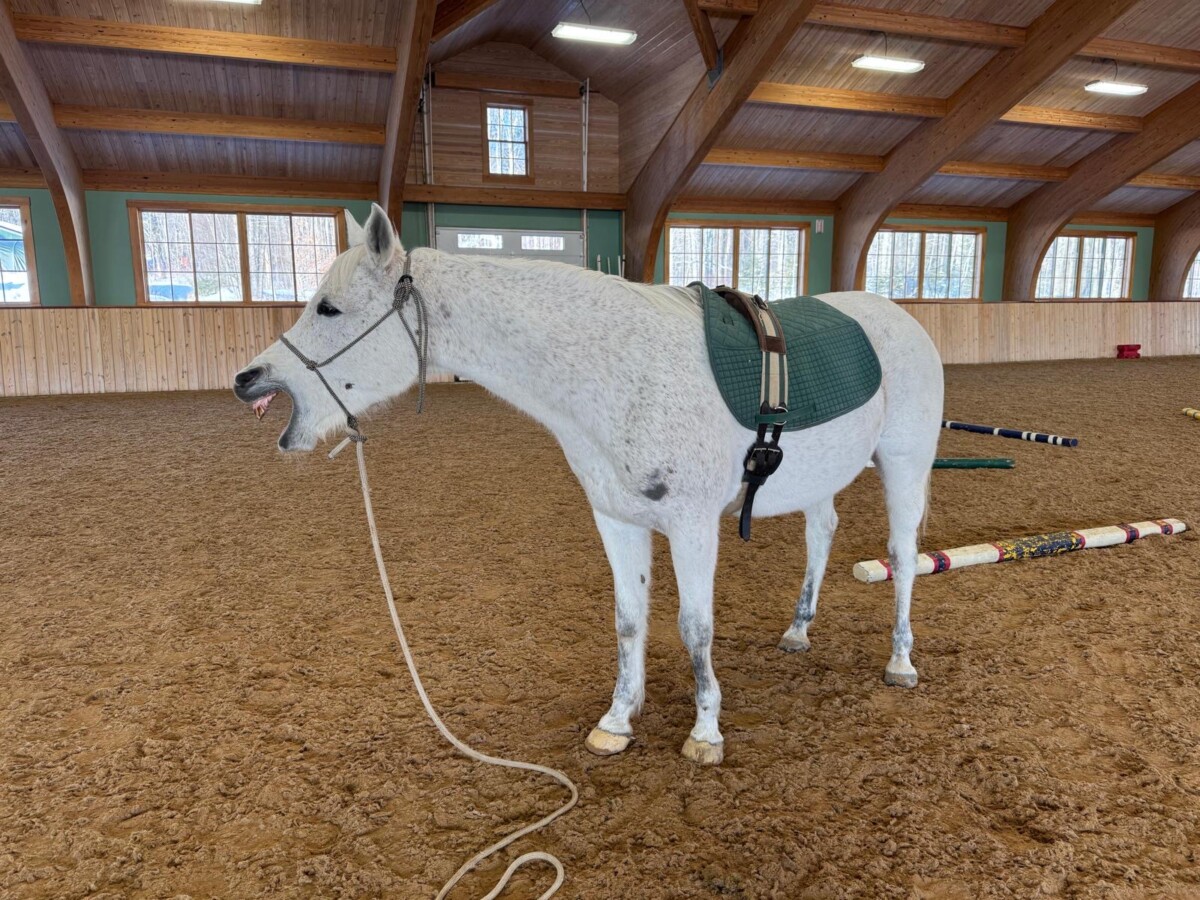 Positive reinforcement has not been especially helpful with Galaxy, perhaps because there is often anxiety connected to her patterns. If a horse feels unsafe, food won’t help them relax– they are programmed in those times to fight or flee. Galaxy is one whose pattern is to move her feet, and so for her, letting her move but directing her feet is the best bet. We can guide her and then continue to offer the chance to stand, until she realizes that’s an option she could try. Likewise with touch, if she gets defensive we can play approach and retreat to signal that we see and acknowledge her discomfort, but gently continue until she softens her reaction.
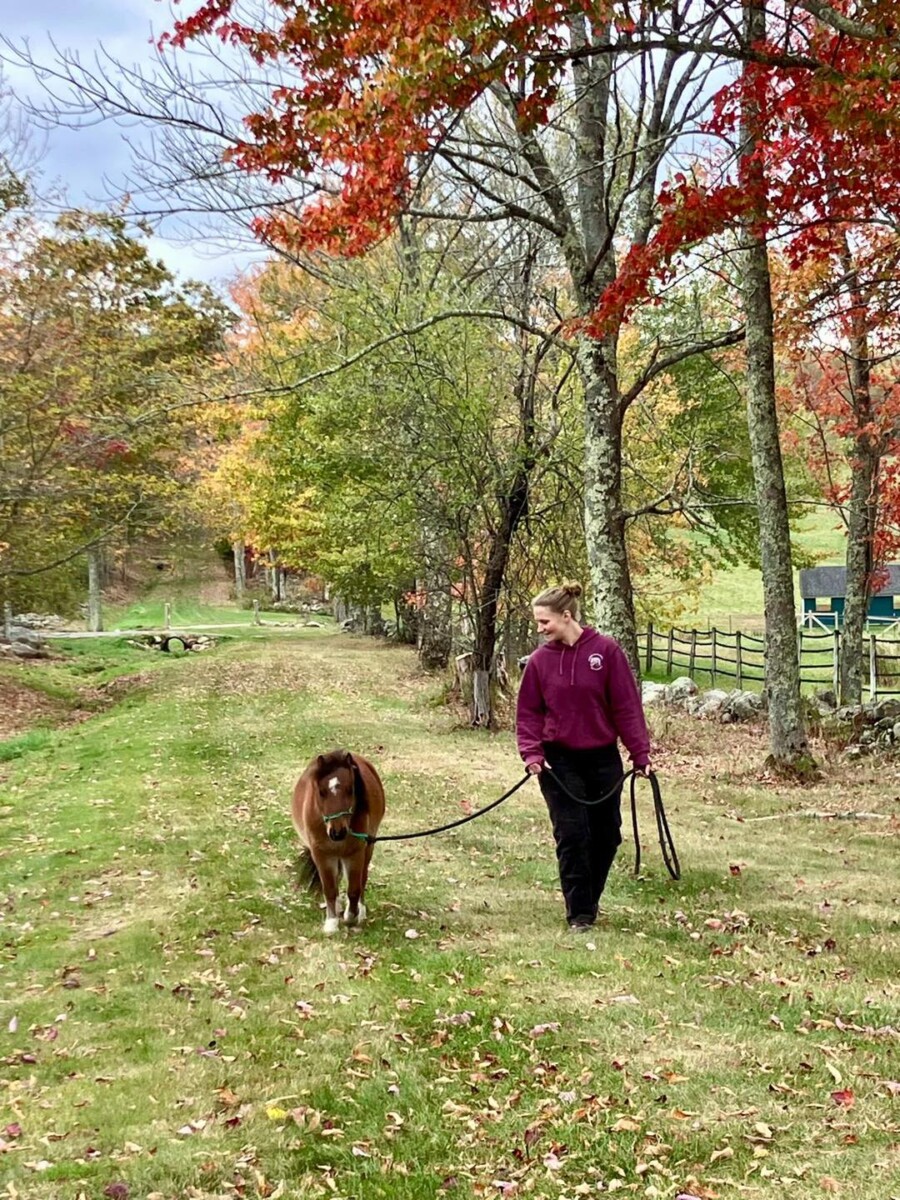 Each day with every horse we handle, the question arises: is what we’re asking a fair, reasonable and possible request for them physically and mentally, at this time? Sometimes it’s an obvious yes, for example with Cheyenne and her feet. She can pick them up herself when running around, and it is a necessary part of her existence in a human world. Likewise with Sunny and getting her temperature taken: it’s not causing pain, so we can help create a new pattern here. But very often it will not be so clear cut, and we have to rely on our knowledge and the expertise of our vets, farrier, and mentors for guidance. Time and again, we have seen consistency, good health, and physical fitness truly work miracles. Horses have an amazing ability to let go of old patterns, and learn new ones given the chance, and when they understand what you’re asking and are physically able to do it, they usually will!


